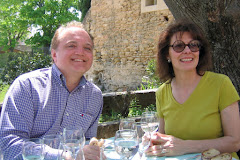
We settled in these Green Mountains in the early 1970's at the call of our collective consciousness, a back-to-the-land movement for collegiate Utopians. There was a caravan of us. We didn't know one another and though personally we weren't quite hippies, we too were looking for a promise. The Green Mountains, a "special place," also made us feel that way.
Many of us now have businesses of our own and the dream is still so real the dirtier aspects of life in these Green Mountains are mere undercurrents to the tangible ephemera of life as it should be. A sunny "California" day can bring tears of endorphin joy, with skies so blue one wonders if there is an azure filter for the sunlight that beams through the scattering of white clouds.
We save, recycle, and re-sell the idea
of our lofty lifestyle. It makes us feel good, or whole, or at one with our
green land surround. We strive to be green, greener than our neighbors, and our
former selves, or our family-- maybe guiltily making up for our family. Like
the mountains, green is good or it just makes you feel that way, especially when
participating in the manifest destiny of a green state.
"In an {un-}recent poll conducted by Pitne' Bowes Business Insight and Earthsense, an applied marketing company, Vermont was ranked the 'greenest' state in the country in terms of citizens most likely to exhibit green behavior."
When I read this old quote in the Burlington Free Press I am not surprised. Why is this unusual in a state with a spine of Green Mountains? It's a color with which much of the state is naturally decorated, inside and out--along with a sprinkling of familiar barn red.
It's now easier to be green than it was a few decades ago. Then it wasn't universally cool, or fashionable, or agreeably main street acceptable. It was a struggle to get a new cook to understand a pail of fruit and vegetable pulp needs to be saved for compost. "Crazy" for then and too late for us now that they understand. Before our restaurant was shut down by an act of nature, our compost bin was shut down by the state--an irony of the struggle.
Slowly Utopia seekers take over the Vermont congress and thirty something years later composting becomes an official law. To ease us into it, the Vermont History Center displays a retrospective of the counterculture movement, complete with yurt.
Farmers understood it then and we all understand it now. We agrarian in-betweens may have personally lost but the lost compost is everyone's loss, so back to the future we go!
Tuesday, December 26, 2017
Sunday, November 29, 2009
The Raw and the Cooked: restaurant as bridge
 The Raw and the Cooked (Le Cru et le cuit) is one of the titles from Mythologiques I-IV written by French anthropologist Claude Lévi-Strauss. Here he notes that in changing raw foods into cooked delicacies we transform nature into culture.
 By doing so we civilize our animal instincts, and this I think is the role of a restaurant. In a public eatery we do not diminish gustatory pleasure, but we savor and enjoy prepared food in the company and conversation of others, or alone in thought and reflection. The point is that your mind is also engaged, creating a symbiosis with your body.
Recent anthropological studies by Prof Richard Wrangham of Harvard University underscore the evolutionary association of brain to gut. He reasons that more blood is needed to keep the gut going, and when thinking man discovered fire, cooking evolved, creating more easily digestible fuel. A bigger brain, he says, eventually led to a smaller gut.
The etymology of the word restaurant is to restore oneself, physically and mentally. It's a place to socialize, where interaction becomes culture as restaurants mirror society. We see this in the theatrical aspects of a restaurant, particularly themed ones, with all the mystery and tension of performance that goes on behind a proscenium or behind swinging curtain doors. When dining in a restaurant, nature triumphs with culture as the restaurant bridges this gap.
The trend for quick meals and not socializing with the folks who sit beside you, but with mostly faceless, masked, or cryptic personae on your wireless, is exhilarating for some as techno-man leaps into the 21st century, and distressing to others as they sense a regression in social behavior because of fast food influences.
This is a question the restaurant industry and society in general faces. Are we in a free fall or will we find a new plateau? Fast food, raw food: been there done that.


Saturday, November 21, 2009
A Good Champagne Loves Me

I've written about this before, so when the question about favorite Champagne was recently posed on LinkedIn, I couldn't help but respond. If you are not on LinkedIn, here's my post.
Because I enjoy Champagne so much I have said, "A good Champagne loves me." I am not an expert, but I know what I like; and I like what likes me.
I arrived at this conclusion because I could never understand why some people associate Champagne with headaches. They blame it on sugar. I blame it on price. Literally. Really good Champagne costs.
As does all good wine, Champagne has to come from good grapes and it has to be handled properly. Traditional methods of using only the juice of first pressings and the minimal contact of skins helps make it great. Even with today’s technological advances, there is a need for man hours. All this plus aging before release, and inherent real estate values drives cost.
I love the toast and yeasty flavors of Krug, the ability to have just a glass with a 187 ml. of Laurent-Perrier, and if prone to headaches Bollinger’s RD (recently disgorged.)
As noted by Eugene O’Neill in The Iceman Cometh, "Some people do love their Champagne." As do I. Dry, tiny bubbles, maybe a hint of lemon, or a little age. Rounded so it glides, with a lingering finale. And because I feel good the next day, I know I am loved.
Saturday, September 19, 2009
Vermont’s Wine Future

Topic of Discussion with Grape Growers OCT 30
There is a lot of buzz going on in Vermont grape growing circles, albeit still a concentrically small circle, but nevertheless growing as it hums about a newly released cold hardy grape varietal. On Friday, October 30th, Vermont estate winemakers will speak about the future of Vermont wine at a special dinner to be held at Hemingway’s.
Derived from the University of Minnesota Horticultural Research Center, the hybrid vine, Marquette, has been planted by at least two Vermont wineries with excellent results in barrel and now in bottle.
Withstanding temperatures as low as -36° F Marquette brings a ray of sunshine to what used to be a cloudy Vermont wine future. Not only does it survive cold, but also it is disease resistant and makes a quality wine. Time, terroir, and wine making skills will eventually distinguish Vermont wines from each other and from the rest of the world.
There is also buzz about maintaining integrity in wine labeling in our small state. A recently formed Vermont Grape and Wine Council has become necessary for the 20 or so wineries that now exist from 25 years ago. Some members are pushing for self-regulatory guidelines mandating that grapes be grown in state if labels proffer Vermont wine. They contend that blending or sole use of viniferous grapes grown in warmer areas should be specified and in limited amounts. (Vitus vinifera grapes are common European varietals such as Chardonnay, Cabernet Sauvignon, and Pinot noir that have traditionally set the standard in producing excellent wines.)
Addressing this concern, Lincoln Peak Vineyard, for example, has this statement on their website about “Vermont wine, or ‘Vermont’ wine.
It's great to see the Vermont wine industry take off, but consumers should be aware that not all the wine that's sold by Vermont wineries is made from Vermont grapes. Some ‘Vermont’ wine isn't even made in Vermont. It's made in other states and simply bottled in Vermont. This wine may be perfectly delicious, and there may be situations where importing fruit is necessary -- when a new Vermont winery's own vineyard hasn't yet come into production, or when bad weather reduces the grape crop. But in the long run, I'm convinced that to gain identity and respect as a wine region, Vermont wineries need to grow and produce our own unique wines. As the largest grape grower in the state, I'm encouraging other Vermont wineries to produce the delicious wines that truly have the taste of our special place.
100% of the grapes in Lincoln Peak wine are grown here, and (barring weather disasters) always will be.”
We have held a series of harvest dinners at Hemingway's featuring local farmers since 1990, because we always enjoy educating the public to the pleasures of the table, and to the artful pairing of food and wine. Come taste, listen, learn, and enjoy with us!
Tuesday, September 8, 2009
A Thug I like

 Several years ago, I planted Rosa rugosa, a small, hardy, wild rose bush. It is finally at optimum height, is spreading, and is doing what it's supposed to do: provide fragrant summer flowers, and now in September, laden itself with fruit which I harvest for jam, jelly, or sauce. This year is our best crop thus far, and we will use the finished product at our fall harvest dinner featuring Vermont estate winemakers.
Rose hips, as the pome fruit is known, is tart, low in pectin, full of seeds, widely used in herbal teas, and is a source for vitamin C. Though I have not yet tried them, the leaves are said to make tea, and the flower petals are edible as are other rose petals.
Since it's sunny location was near the road I planted the shrub because of its easy care, tolerance for salt, sun, and poor soil. Some folks prune them, but I planted them in an area so they could go untamed without care. Seen growing wild along sea shores, it is also known as salt spray rose, sea rose, and sea tomato.
In some of these areas it is considered an invasive weed, but I would be happy to have this fruit bearing thug overtake other weeds and trees I prefer not to have. Perhaps in these milder areas they are more of a nuisance than here in our cold haven--just another reason to love Vermont!
Thursday, August 6, 2009
Hyper Vine Longing for Sunshine: Ray Knutsen, Vermont Winemaker Part 1
We spent the afternoon with Ray Knutsen at his vineyard and winery in Benson, Vermont. He is enthusiasm on steroids--the epitome of the garage wine mechanic. Able to leap large ideas in a single bound, he planted his first vines in the mid-seventies, going through the maelstrom of trying to bring vinifera to Vermont only to emerge years later as a sort of Guru of hybrid varietals. Based on his extensive research, trial and error, and uncompromising honesty about what can really work on a cold hilltop in Vermont instead of the Elysium slopes of the Côtes d’Or in France.
Ourselves being Vermonters for 30 plus years (don’t say that to a local) our first question was what we thought the obvious one: “How much cold can these guys handle?”
Answer: “40 below.” Ray nosedives his hand and then levels off. ”No vines like a major change from say 20 degrees to 30 below, but these Minnesota hybrids do fine here.”
But it’s not the bigger deal here in Vermont this year. What is, is rot, WEATHER, rain, mold, mildew, numerous fungi. The University of Minnesota being the vanguard of hybridizing vinifera so places like there and here can grow grapes and make wine. We suspect they are working on fungi after Ray animates the plucking of weaker strains from the test beds.
Free association now from Ray, a vortex of information on lessons learned in Minnesota, the dizzying number of vines tested each year, their process of elimination, the how’s and why’s of The University of Minnesota’s snail pace when it comes to releasing new hybrid grapes. I mean we are mortal, so if you want to get a leg up and move forward in the Vermont wine world you may have to live to be 200!
We try some Le Crescent out of one of the stainless tanks, reminiscent of Riesling, but a bit edgier, with less of the petroleum nose we’re used to in some European Rieslings. Clean, tight, a food wine as they say. Then we spit and miraculously the three of us all begin to crow about chewable, flabby, cream-soda-like, monster, American Chardonnays with alcohol levels that could kill off a sumo wrester after two sips. And they are not all cheap wines!
Ourselves being Vermonters for 30 plus years (don’t say that to a local) our first question was what we thought the obvious one: “How much cold can these guys handle?”
Answer: “40 below.” Ray nosedives his hand and then levels off. ”No vines like a major change from say 20 degrees to 30 below, but these Minnesota hybrids do fine here.”
But it’s not the bigger deal here in Vermont this year. What is, is rot, WEATHER, rain, mold, mildew, numerous fungi. The University of Minnesota being the vanguard of hybridizing vinifera so places like there and here can grow grapes and make wine. We suspect they are working on fungi after Ray animates the plucking of weaker strains from the test beds.
Free association now from Ray, a vortex of information on lessons learned in Minnesota, the dizzying number of vines tested each year, their process of elimination, the how’s and why’s of The University of Minnesota’s snail pace when it comes to releasing new hybrid grapes. I mean we are mortal, so if you want to get a leg up and move forward in the Vermont wine world you may have to live to be 200!
We try some Le Crescent out of one of the stainless tanks, reminiscent of Riesling, but a bit edgier, with less of the petroleum nose we’re used to in some European Rieslings. Clean, tight, a food wine as they say. Then we spit and miraculously the three of us all begin to crow about chewable, flabby, cream-soda-like, monster, American Chardonnays with alcohol levels that could kill off a sumo wrester after two sips. And they are not all cheap wines!
Wednesday, August 5, 2009
Ride of the Valkyries: Ray Knudsen, Vermont Winemaker Part 2
The pirate Ray leaps towards a single barrel, “This may put us on the map!” He plunges his thief into the barrel. It’s Marquette (hybrids are named after towns in Minnesota) planted about three years ago. Wild cherries jumping out of the glass, spice and pepper with soft tannins. We think a softer version of a northern Rhone. There is only one barrel made.
“Wanna see the vineyards? Want this barrel? Wait. Dump. Wash. Here! Try this. It’s the base for my forthcoming sparkling." We get a fine Muscat aftertaste, yet of the clean finish in Champagne. Stay with this one Ray.
We follow Ray bouncing atop his ATV towards the vineyards. We’ve lived on the top of more than one mountain for near 20 years, yet Ray makes us feel suburban. At about 600 feet there is a sweep of land with 50 plus rows of grapes and a well-trodden road cut down the middle. The canopies, so familiar elsewhere, are different here--propped up along wires on posts that Ray has sunk himself over the years. They droop a bit, almost a cower compared to the vinfera vines that stand at attention and say, “I am the proud bearer of the fruit of centuries.”
“What’s going on Ray?”
“The hybrids grow down, vinifera grow up.” That simple.
“What happened to those few rows?” we ask, pointing down hill.
“Scrawny, huh? Minnesota thinks they may be too ugly or shabby or whatever. No official name yet. But it could be the future of red wine in Vermont.”
Okay one last thing. We storm back down to the winery, replete with a pile of rocks nearly blocking the door and raspberries ripe for harvest just an arms length away.
“Don’t think I need to have a tasting room for everyone, what do you think?’
We agree. “You don’t need tire kickers.”
You Know Thaaat! Ray pops a small bottle of a chilled wine that looks like sherry, smells a bit like Marsala and tastes like almonds soaking in apricots and apples.
“I had these extra grapes and didn’t know what to do with them so instead of throwing them out I called my friend, Chris Granstrom, who is also a winemaker in Vermont. We decided to haul them upstate and for no good reason to rent some locker space and freeze all of them whole and deal with them later. Want do you think?”
“Ice wine?” we asked
“Ice wine … sort of. A wine taster from Spain came by after we bottled it told and said we were sitting on a treasure.”
“It would go great with the dessert course on our wine tasting menu at Hemingway’s.”
“Agreed.”
We took the last little sip of our “non-spitter” and invited Ray to do a Vermont winemakers dinner in October with a few of his fellow winemakers.
“Of course,” he replied.
We got into the car and drove down the hill towards Fair Haven and then across to Rutland thinking, "We're going to have fun at our end of October dinner!"
“Wanna see the vineyards? Want this barrel? Wait. Dump. Wash. Here! Try this. It’s the base for my forthcoming sparkling." We get a fine Muscat aftertaste, yet of the clean finish in Champagne. Stay with this one Ray.
We follow Ray bouncing atop his ATV towards the vineyards. We’ve lived on the top of more than one mountain for near 20 years, yet Ray makes us feel suburban. At about 600 feet there is a sweep of land with 50 plus rows of grapes and a well-trodden road cut down the middle. The canopies, so familiar elsewhere, are different here--propped up along wires on posts that Ray has sunk himself over the years. They droop a bit, almost a cower compared to the vinfera vines that stand at attention and say, “I am the proud bearer of the fruit of centuries.”
“What’s going on Ray?”
“The hybrids grow down, vinifera grow up.” That simple.
“What happened to those few rows?” we ask, pointing down hill.
“Scrawny, huh? Minnesota thinks they may be too ugly or shabby or whatever. No official name yet. But it could be the future of red wine in Vermont.”
Okay one last thing. We storm back down to the winery, replete with a pile of rocks nearly blocking the door and raspberries ripe for harvest just an arms length away.
“Don’t think I need to have a tasting room for everyone, what do you think?’
We agree. “You don’t need tire kickers.”
You Know Thaaat! Ray pops a small bottle of a chilled wine that looks like sherry, smells a bit like Marsala and tastes like almonds soaking in apricots and apples.
“I had these extra grapes and didn’t know what to do with them so instead of throwing them out I called my friend, Chris Granstrom, who is also a winemaker in Vermont. We decided to haul them upstate and for no good reason to rent some locker space and freeze all of them whole and deal with them later. Want do you think?”
“Ice wine?” we asked
“Ice wine … sort of. A wine taster from Spain came by after we bottled it told and said we were sitting on a treasure.”
“It would go great with the dessert course on our wine tasting menu at Hemingway’s.”
“Agreed.”
We took the last little sip of our “non-spitter” and invited Ray to do a Vermont winemakers dinner in October with a few of his fellow winemakers.
“Of course,” he replied.
We got into the car and drove down the hill towards Fair Haven and then across to Rutland thinking, "We're going to have fun at our end of October dinner!"
Sunday, August 2, 2009
No Crying in the Kitchen
 Friday, August 28 / 7PM
 We're having dinner with guest author, Michel LeBorgne, of the New England Culinary Institute, and you're invited!
Gather with us for an entertaining dinner with affable Michel LeBorgne, of Vermont’s New England Culinary Institute. Chef Michel will chat about his recently published memoir, No Crying in the Kitchen, full of humorous stories behind his involvement with NECI, one of the best culinary arts school in New England. With his superlative work ethic as a teaching chef, Michel discloses he has done it all, and all for the rewarding success of his students.
Menu items will be intrepreted from recipes in Michel's book. Visit Hemingway's Restaurant website for details.
Special offer: autographed books only $18.95-- perhaps a great Christmas present for your culinary favorite!
This is an AIWF event. Proceeds from the dinner and books sold this evening help fund the America Institute of Wine & Food Culinary Scholarship Fund, available to Vermont students who seek a culinary education.
It is an honor to have Chef Michel with us on this special day, as we celebrate Hemingway’s 27th year of business. Some nightly surprises surely await.
Tuesday, July 14, 2009
A Plate Full Proposal

Finding an exotic and unusual venue for one’s marriage ceremony is near de rigeur in our adventure seeking society. You may know a couple who tied their knot on, under, or over water, or while hanging cliff side, or while schussing around slope side.
And the proposal of marriage is now just as important as the wedding ceremony itself. There are web-sites and books devoted to unique engagement ideas, but we’ll save you the trouble of searching them out by divulging the story of an exceptionally devoted lover.
Hemingway's has long been noted as a hideaway for romance and weddings--even dubbed by Esquire as “One of the most romantic restaurants in America,” so the clever paramour solicited our help.
We happily oblige the gentleman's request, and with our usual aplomb the lady is served her main course. ‘Twas on a plate, of course, but not just any plate. This plate was shipped two weeks ahead along with another plate as well as detailed instructions of with what and when to serve. Nervously, he squirms with giddy delight as he watches his lady slowly eat her meal. She takes a bite, she speaks of the meal’s fineness, she sips some wine. She makes another cut, takes another bite, murmurs, sips a bit more wine.
At a do-it-yourself ceramic center and with no prior experience the starry-eyed admirer created plates of his own design and permanently inscribed under the glaze his secret seductions. Nonchalantly and with patient intent, the boyfriend watches his girlfriend squint. She, not wanting to believe something could be amiss, dines with silent smile, a gentle push of fork, a smear of sauce, a delectable bite, until finally she ruminates about a grander design.
Then she does see, “Will you marry me?” and he jubilantly confesses. The lady being questioned relishes her paramour’s request and says she will! And he too was served dinner with a plate inscribed “I Love You” so that they should dine happily together in anniversary ever after.
Sunday, June 21, 2009
Killington Wine Fest Dinner

Origin of the Species: Château de Beaucastel begets Tablas Creek
Friday, July 17 / 7 PM
Robert Z. Haas, founder of Vineyard Brands importing company and managing partner of Tablas Creek Vineyard in Paso Robles, California, will conduct our annual Friday night wine tasting in conjunction with the Killington Wine Fest.
In keeping with Bob's connecting role between California and French wine producers, he will compare the stylistic similarities and differences between the wines of Tablas Creek Vineyard and the esteemed Château de Beaucastel, partners in his Tablas Creek venture.
It is a closer connection than you might imagine!
Visit our website, Hemingway's Restaurant, for menu details.
Friday, June 19, 2009
Morel Adventures


I love to stumble across a morel on a spring morning as my less than focused gaze glides along the base of ash trees--a sort of soft radar, a non-evasive foray into the mystery of brown and golden soldiers scattered across land, convincing me that any rational or scientific approach to determine their whereabouts will be dismissed by them as not an arcane enough approach and therefore one not to be rewarded. The harder you look the less you see. You look and rant and try to control the universe in which they belong, and then suddenly, they are there at your feet saying, “I’ve been here all along.”
Everyone has their favorite morel recipe, which more often is a morel story, as the adventure is half the prize. Recently someone dumped some dirt into a mound on a hill top road, where walking, not stalking to forage, is the rule. But there they were, popping out of the top of a small heap. The perfunctory ash tree stood watching me snap a blondie just inches away.
I prefer to cut out the bottoms, get a pastry bag, fill it with some rabbit mousse and shoot it into the hollow cavity of the morel. Bake in the oven not too hotly with some stock in the bottom of the pan until the mousse firms up, gets warm, and the morel starts giving off its woody tobacco sweetness without drying out.
Add some butter at the end into the pan with stock and there’s your sauce. Haunting textures, aromas, and flavors never forgotten.
Aside from sautéing them in butter with a drop of lemon, I also like to dry out the morels and grind them into a powder that can be used as a seasoning--or better yet as a coating, like breadcrumbs, on a piece of lamb or chicken. Great nose on that one coming off the stove.
Thursday, June 11, 2009
Killington Wine Fest
 Saturday, July 19
Mark Raymond will be available for most of our dinner hours to answer your questions and discuss the wines of Frederick Wildman and Sons, which will be highlighted for the entire weekend on our nightly four course Wine Tasting Menu.
Special for the KWF weekend (FRI-SUN)
$75 for four courses of foods & wines
Menu TBA.
Featured Wines:
Astica, Torrontes, Lujan de Cuyo, Argentina, 2008
Olivier Leflaive, Bourgogne Blanc, Les Sétilles, Burgundy, France, 2007
Melini, Chianti Classico Riserva, Vigneti La Selvanella Tuscany, Italy, 2003
Hugel et Fils, Gewürztraminer, Alsace, France, 2005
Paul Jaboulet, Muscat de Beaumes de Venise, Rhone, France, 2006
Subscribe to:
Posts (Atom)


 Posts
Posts